
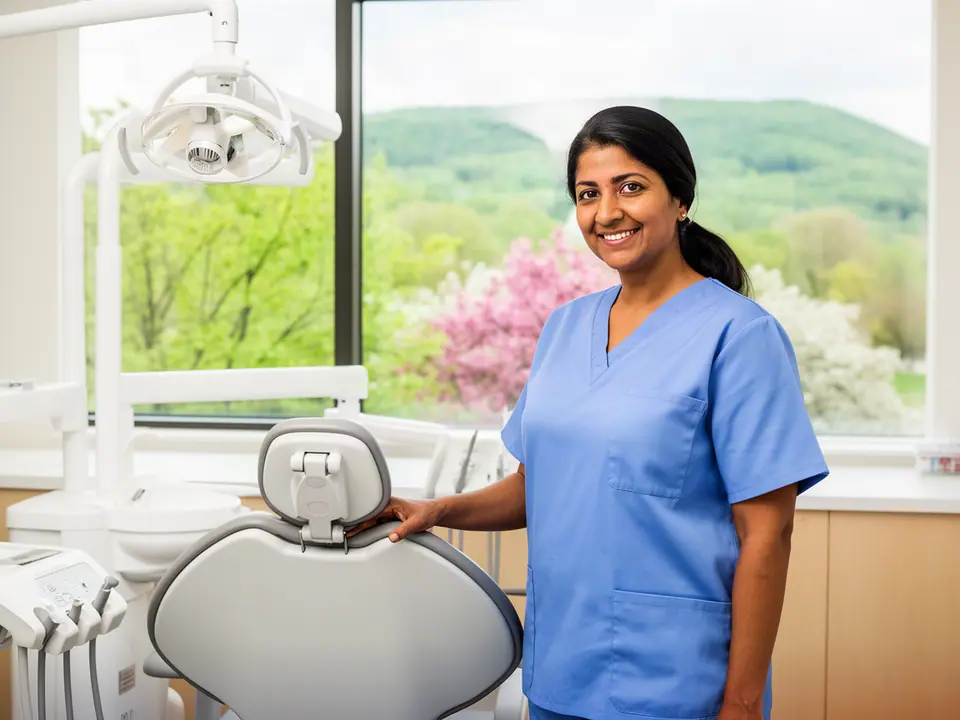
Harborfield Business Capital, which arranges funding for dental practices in Waukesha, WI and Waukesha County, WI, walks through buying an existing dental practice: what the purchase price usually covers, the seller records a buyer should request, how a dental practice purchase loan is structured, and how to budget for the transition months. Partners set all terms.
The Market for Dental Practices in the County
County Business Patterns counted 226 offices of dentists in Waukesha County, WI in 2023, with 2,063 employees. Only 32.7% had fewer than five employees, so most of these offices have five or more people on payroll. ZIP 53186 alone had 22 dental offices (ZBP 2023). Nonemployer Statistics counted 53 dentist businesses without payroll in 2024, a separate program.
That staffing matters to a buyer. Retaining the team through the transition is part of what keeps patients, and payroll is a major cost the new owner takes on from day one.
What the Purchase Price Usually Covers
- Equipment and furnishings: chairs, units, imaging, sterilization, cabinetry, computers.
- Patient records and goodwill: the patient base and the practice's name and reputation.
- Supplies on hand: sometimes counted separately at closing.
- Real estate: only if the seller owns the building and it is part of the deal; usually financed separately with a commercial mortgage.
Goodwill can be a large component and hard to verify, which is why partners focus on the records behind it.
Records to Request From the Seller
- Three or more years of practice tax returns and profit and loss statements.
- Production and collections reports by provider and by procedure category.
- Active patient counts and new-patient trends.
- The payer mix: insurance plans, fee schedules and the share of fee-for-service patients.
- An equipment list with ages and service records.
- The lease, including remaining term, renewal options and assignment terms.
- Staff roster, pay and tenure.
A partner financing the purchase will ask for most of these, plus the purchase agreement and your own finances. Collecting them early shortens the review.
How a Dental Practice Purchase Loan Is Structured
The core is a term loan for the purchase price, often alongside a down payment from the buyer and sometimes seller financing for part of the price. Partners look at whether the practice's historical cash flow, after paying the new owner a reasonable income, covers the payment with room to spare.
New equipment the buyer plans to add, such as a cone-beam unit or new operatories, can be financed separately as equipment, so its payment matches its life. Dental practice financing compares those structures for existing owners as well as buyers.
Budgeting for the Transition Months
Patient flow can dip after a change of ownership while patients meet the new dentist, and insurance credentialing under a new owner can delay some claims. Illustration only: if the practice's monthly expenses run $85,000 and collections dip by 10% for three months while some claims are delayed, the buyer may need roughly $40,000 to $60,000 of working capital beyond the purchase price. Plan for it in the request rather than after closing.
Testing the Payment Before You Commit
Use the dental office loan calculator to see how the monthly payment, total interest and total repaid change with the amount, a test rate and the term. Then compare the payment with the practice's average monthly collections minus expenses, using the seller's records. County context for the practice's area is on the Waukesha, WI figures page.
More Posts
Other purchase and cash-flow notes are on the Harborfield blog.